Playtag Blog
In conversations about technology in early childhood education, data security is often discussed in technical terms. Encryption, access controls, compliance standards. These details matter, but they are rarely what people are truly worried about. What parents, educators, and school leaders are actually asking is something deeper: Can this system be trusted with information about children?
That question becomes especially important when behavioral analytics are involved. Behavioral data is inherently personal. It reflects how children move, interact, regulate emotions, and engage with their environment. In many cases, this data can be identifiable. Pretending otherwise does not build trust. Acknowledging that reality and explaining how responsibility is exercised is where trust begins.
Research on AI-enabled early education consistently emphasizes that children represent a uniquely vulnerable population in data systems. They cannot meaningfully consent, and they have no control over how long information about them may persist. This places a higher ethical burden on institutions and technology providers alike to think beyond minimum compliance and toward long-term responsibility (Yilmaz et al., 2024).
The Tension Between Insight and Responsibility
Handling identifiable behavioral data responsibly does not mean avoiding data altogether. It means being intentional about why data is collected, how it is interpreted, and where its limits are drawn. Behavioral analytics can support educators by revealing patterns that are difficult to see in the moment such as changes in engagement across the day, shifts in classroom dynamics, or external factors that influence learning. These insights become problematic only when data is collected without purpose, stored without limits, or interpreted without context.
Responsible use requires restraint. Research highlights data minimization as a core ethical principle in systems involving children. Just because technology allows extensive data capture does not mean all data should be retained or used. Responsible systems make deliberate choices about what information is necessary and what is not, even when that choice limits analytical depth.
Why Restraint Is a Security Practice
Security is often associated with protection against breaches, but in educational settings, it also involves protection against overreach.
Behavioral data carries meaning beyond numbers or timestamps. When such data is identifiable, even well-intentioned use can create discomfort if boundaries are unclear. Research on data governance in educational settings highlights that unclear access rules and limited transparency can heighten anxiety among educators and families, particularly when children’s data is involved. Clear limits help reduce that uncertainty by making expectations visible and predictable.
Restraint also shapes how data is understood. Limiting access to individuals with a defined educational role reduces the risk of misinterpretation and unintended use. Clarifying how behavioral data should be read, and in which contexts it should inform decisions, helps prevent conclusions that extend beyond the data’s original intent. These boundaries protect children not only from unnecessary exposure, but also from being reduced to incomplete or decontextualized interpretations of behavior.
Decisions about data retention carry similar weight. Keeping identifiable information longer than necessary increases both technical risk and psychological unease. Studies on ethical and policy challenges of AI in early childhood education highlight that decisions about data retention play an important role in shaping trust among educators and families (Wu, 2025). When schools and technology providers articulate clear timelines for how long data is kept, they communicate respect for the child’s future as well as the family’s expectations.
There is also a psychological dimension to security that often goes unspoken. When people feel observed without understanding why, trust tends to erode. When they understand the purpose and limits of observation, trust can grow. Behavioral analytics in early education must be designed with this human reality in mind. Security, in this sense, is not only about protecting systems but is about protecting relationships among schools, educators and parents.
Responsibility Is an Ongoing Practice
Handling children’s behavioral data responsibly is not a static achievement. It is an ongoing practice that requires reflection, adjustment, and humility. As AI continues to shape educational environments, the most important question is not whether data can be used safely in theory, but whether it is used thoughtfully in practice.
Technology alone does not create trust, but care does. When security is approached as a commitment to children’s well-being rather than a checklist of features, behavioral analytics can support educators while respecting the relationships at the heart of early childhood education.
With these principles in mind, StoryLine is built to translate responsibility into everyday practice. Behavioral data is collected for clearly defined educational purposes to support classroom reflection and improvement, not monitoring. Its use is governed by defined limits, including minimal data exposure, time-bound retention, and clear rules around how insights are interpreted.
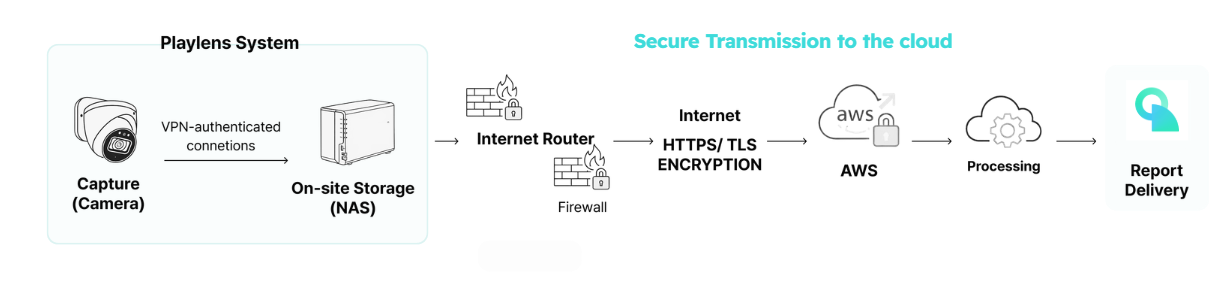
Access to data is restricted through role-based permissions, ensuring only authorized educators and administrators can view information relevant to their responsibilities. See StoryLine in action to understand how thoughtful design helps balance insight with trust in early learning environments.
References:
1. Yilmaz, A., Nacar, M., & Uysal, G. (2024). Ethical Use of Artificial Intelligence Applications in Early Childhood Education. Transforming Early Childhood Education: Technology, Sustainability, and Foundational Skills for the 21st Century, 175
2. Wu, Y. (2025). Small Learners, Big Data: Ethical and Policy Challenges of AI in Early Childhood Education in Global and US Contexts. Language, Literature and Education: Research Updates Vol. 4, 46-75.


 Image Cover.jpeg (72.1 KB)